First Aid advice if an infant or baby is choking
What causes choking in an infant?
When someone is choking, their airway is partly or completely blocked, which may prevent them from breathing properly. They might be able to clear the blockage by coughing, but if they cannot, you will need to help them straight away.
What are the symptoms of choking in an infant or baby?
Symptoms of choking in an infant or baby include being unable to breathe, cry, or cough, having a red, puffy face, and showing signs of distress. To help an infant or baby when they are choking, you should follow the steps below:
The steps you should follow if a baby is choking
Step 1 – Back blows
If the baby cannot breathe, cry, or cough, they may be choking and you will need to give five back blows. Lay the baby face down along your forearm and thigh, making sure you support their head and neck. Give five sharp back blows between the shoulder blades with the heel of your hand.
Step 2 – Inspect
Turn them over on your thigh and check their mouth. Pick out any obvious obstructions you can see with your fingertips. Do not sweep the mouth as this could push the object further down the throat.
Step 3 – thrusts
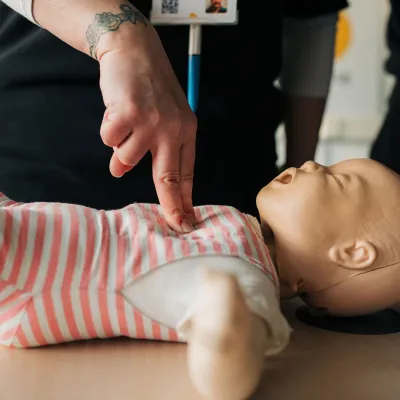
If back blows fail to clear the obstruction, give five chest thrusts with your baby facing upwards, making sure you’re supporting their head and neck. Put two fingers in the centre of their chest just below the nipple line and give five sharp chest thrusts. Check their mouth again, each time you deliver a chest thrust.
Step 4 – Call 999
Call 999/112 for emergency help if the obstruction hasn’t cleared. Take the baby with you to make the call. Keep repeating five back blows and five chest thrusts until help arrives, checking their mouth each time.