
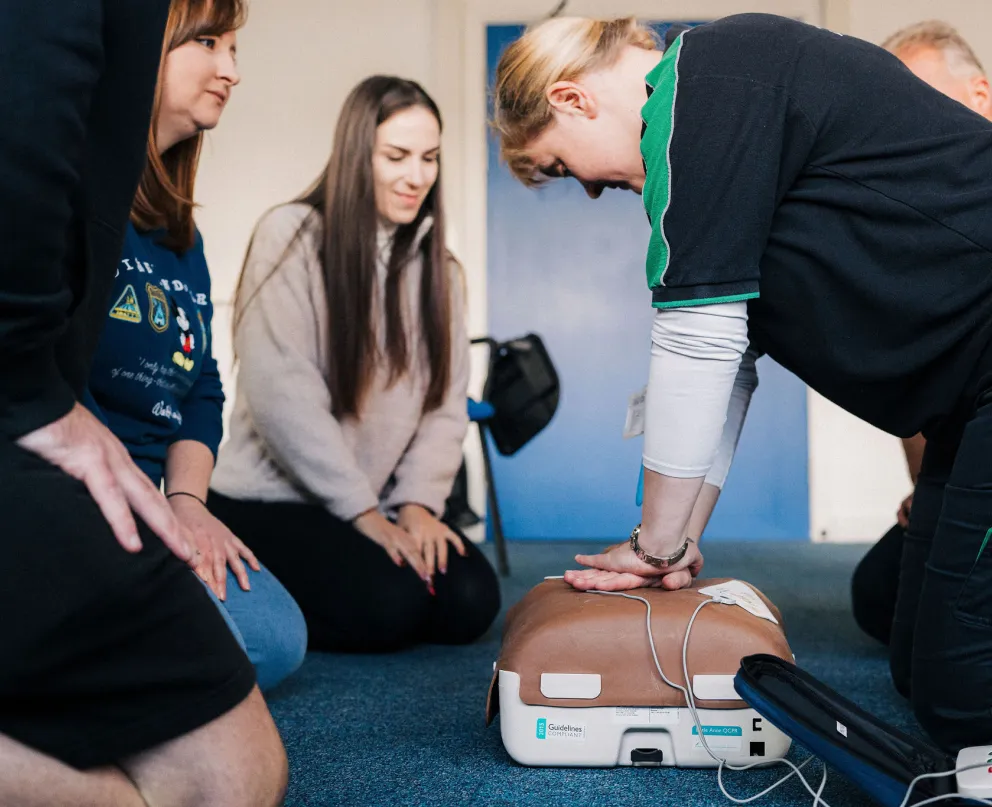


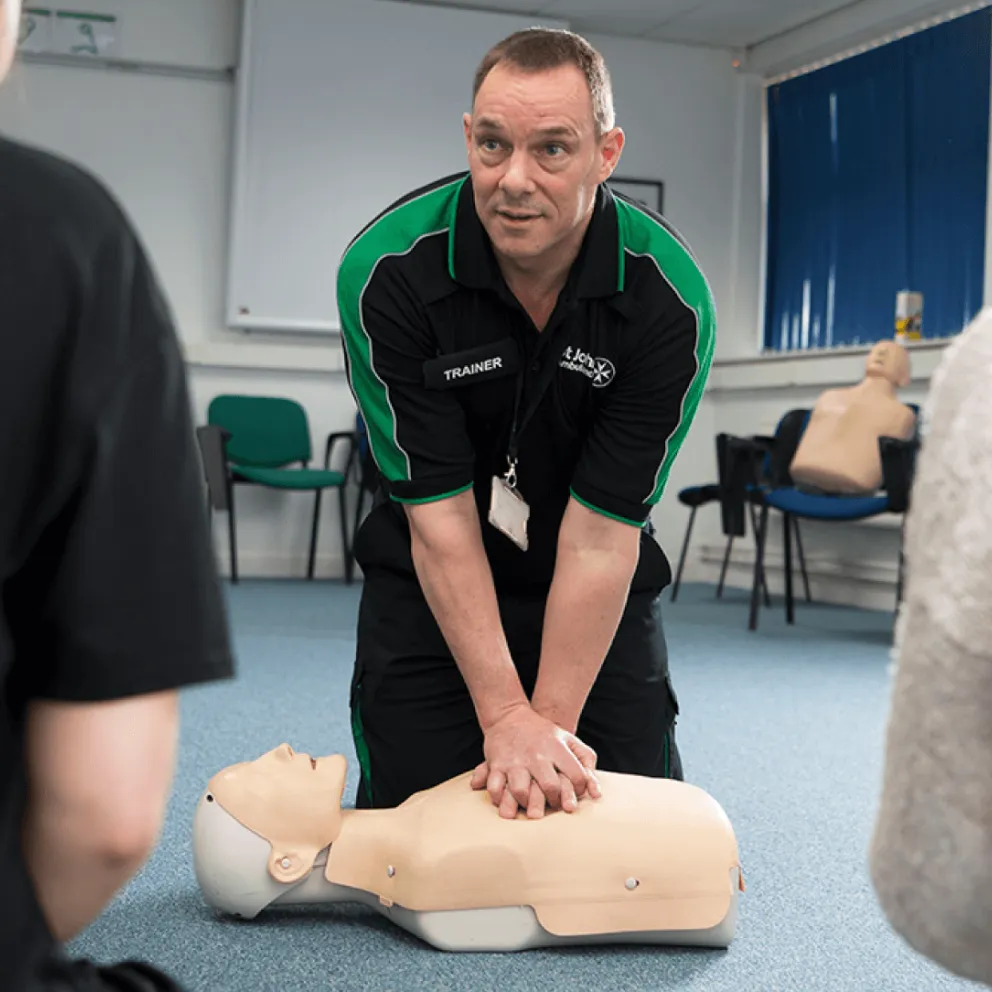
A cardiac arrest can happen to anyone, anywhere, at any time. The survival rate falls by 10% for each minute that passes without the use of an automatic external defibrillator (AED). Our half day defibrillator training course will give you the confidence to act quickly and effectively when using an AED. Most importantly, we teach operators how to perform quality CPR, which is crucial in between defibrillation. Knowledge learned from this course could help you improve the chance of survival of an unresponsive person until emergency services arrive.
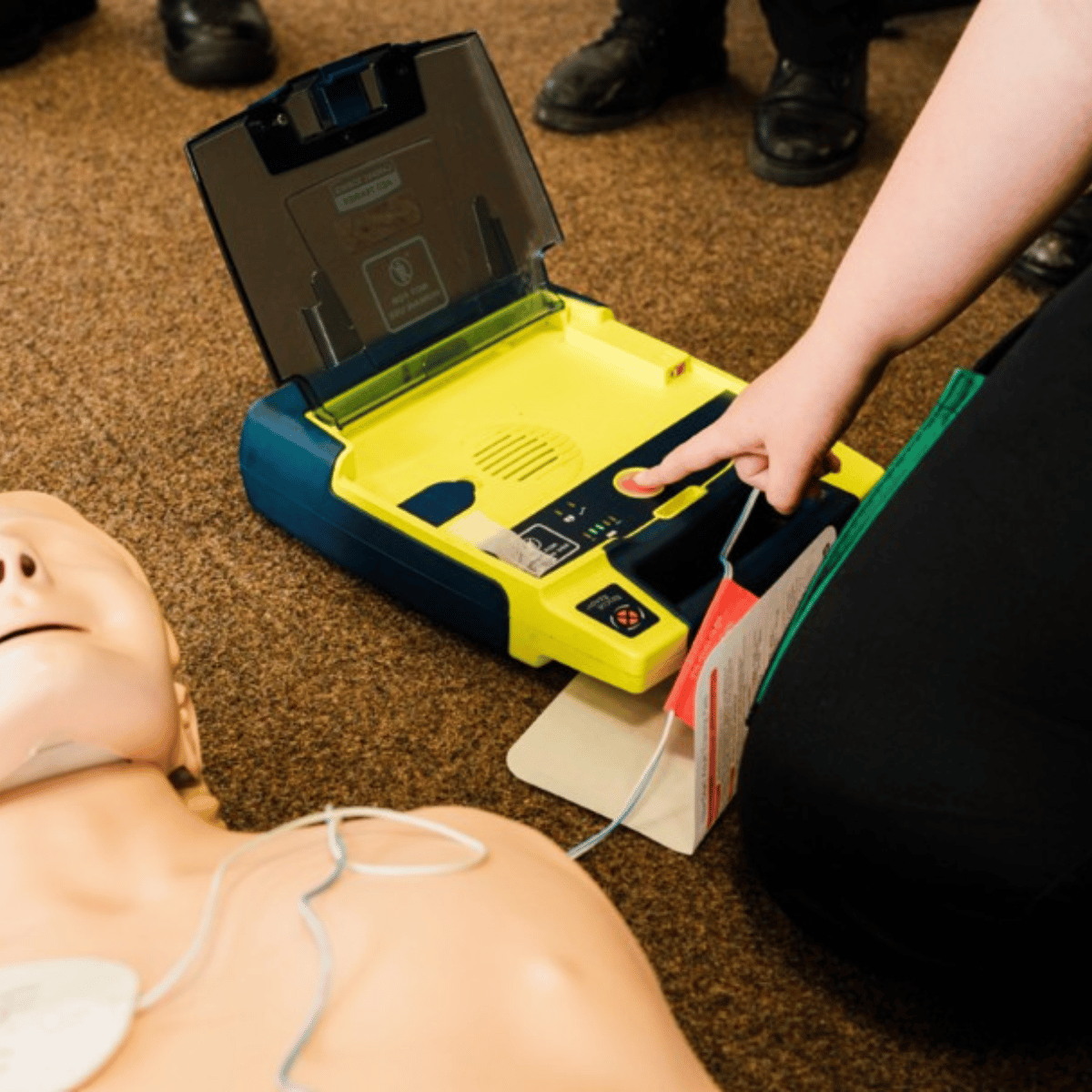
Automated External Defibrillator (AED)
About the course
A cardiac arrest can happen to anyone, anywhere, at any time. The survival rate falls by 10% for each minute that passes without the use of an automatic external defibrillator (AED). Our half day defibrillator training course will give you the confidence to act quickly and effectively when using an AED. Most importantly, we teach…
AED is short for automated external defibrillator. It is also referred to as a defibrillator or defib. An AED delivers an electric shock to the heart to help restore a normal rhythm. When used alongside effective CPR, it can significantly increase a person’s chances of survival. In cases of sudden cardiac arrest, the AED helps “jump-start” the heart, encouraging it to resume beating on its own.
After you successfully complete this automatic external defibrillator course you will receive a certificate which will be valid for 3 years. After this you would need to take the course again to remain certified.
After this course you will know how to use a defibrillator. To be a qualified first aider for your workplace, you will need to take our First Aid at Work 3-Day Course. This provides an in depth look at many first aid emergencies that could happen in the workplace. As part of this training you will learn how to use an AED in first aid.
There is currently no specific law requiring there to be a defibrillator in a place of work. However, it is a vital first aid tool that can mean the difference between life and death. Employers are required to provide adequate first aid equipment and facilities if an employee becomes injured or ill at work. This is mandated by the Health and Safety (First-Aid) Regulations 1981. The designated first aider must do a first aid risk assessment in order to identify what is needed. This may include an onsite AED.
In an emergency you may find yourself asking where is my nearest defibrillator? Nowadays, it is more convenient than ever to be near a public access defibrillator. In an emergency situation, call 999 and they will advise you where on the nearest defibrillator location. You will then be able to use this until the ambulance service arrives. You can use websites such as DefibFinder to see where your nearest AED is located.
We offer defibrillator training at our centres across Wales. If you have six or more individuals which need the training, we can come to you. Contact our training team by ringing 0300 201 1999 or emailing training@sjacymru.org.uk.
What does the course cover?
Familiarisation of AED and contents including defibrillator pads
Basic anatomy & physiology of the heart
Cardiac arrest
Manage an unresponsive casualty who is breathing normally
Manage an unresponsive casualty who is not breathing normally
Chain of survival
Operating an AED & protocols
Special considerations
Post incident awareness