Lifesaving first aid information
Emergencies can happen anywhere – at home, at work, or out in the community. Knowing what to do in those first critical moments can save a life. This section brings together clear, practical advice on a wide range of first aid situations, giving you the confidence to step in and help when it matters most.
Always ring 999 in an emergency.
These resources could help you save someone’s life in future.
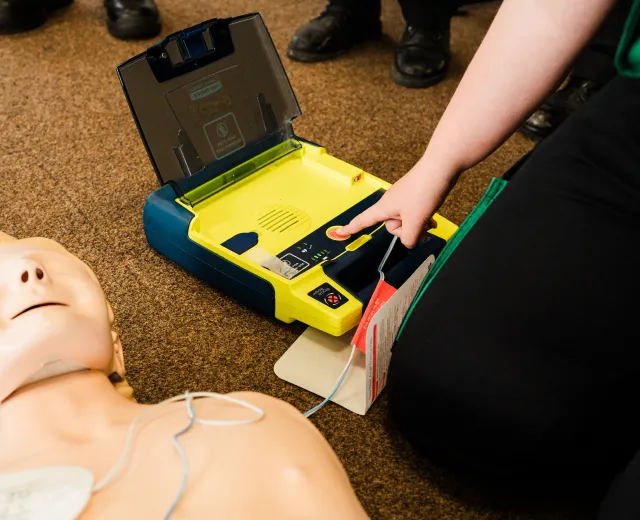
How to use a defibrillator
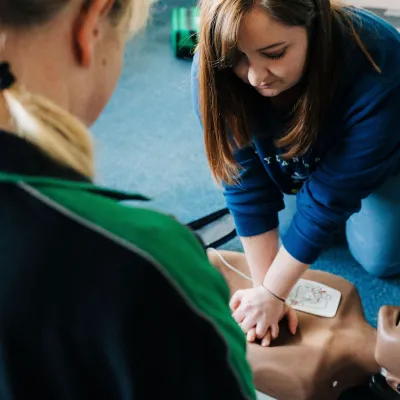
If someone suddenly collapses and becomes unresponsive, their heart may have stopped. A defibrillator (AED) can deliver a life-saving shock to restart it. These devices are designed to be simple, with clear spoken instructions that guide you through every step — so even if you’ve never used one before, you can act with confidence until the ambulance arrives.
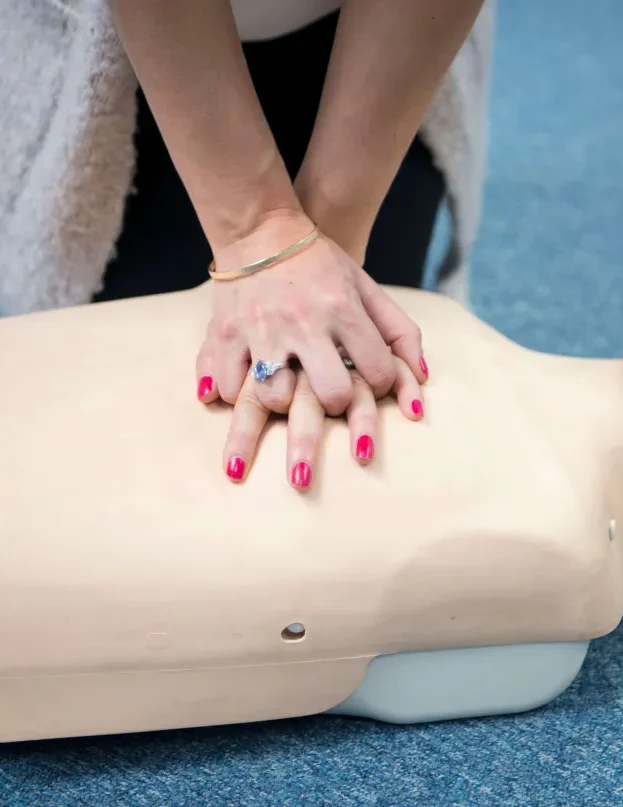
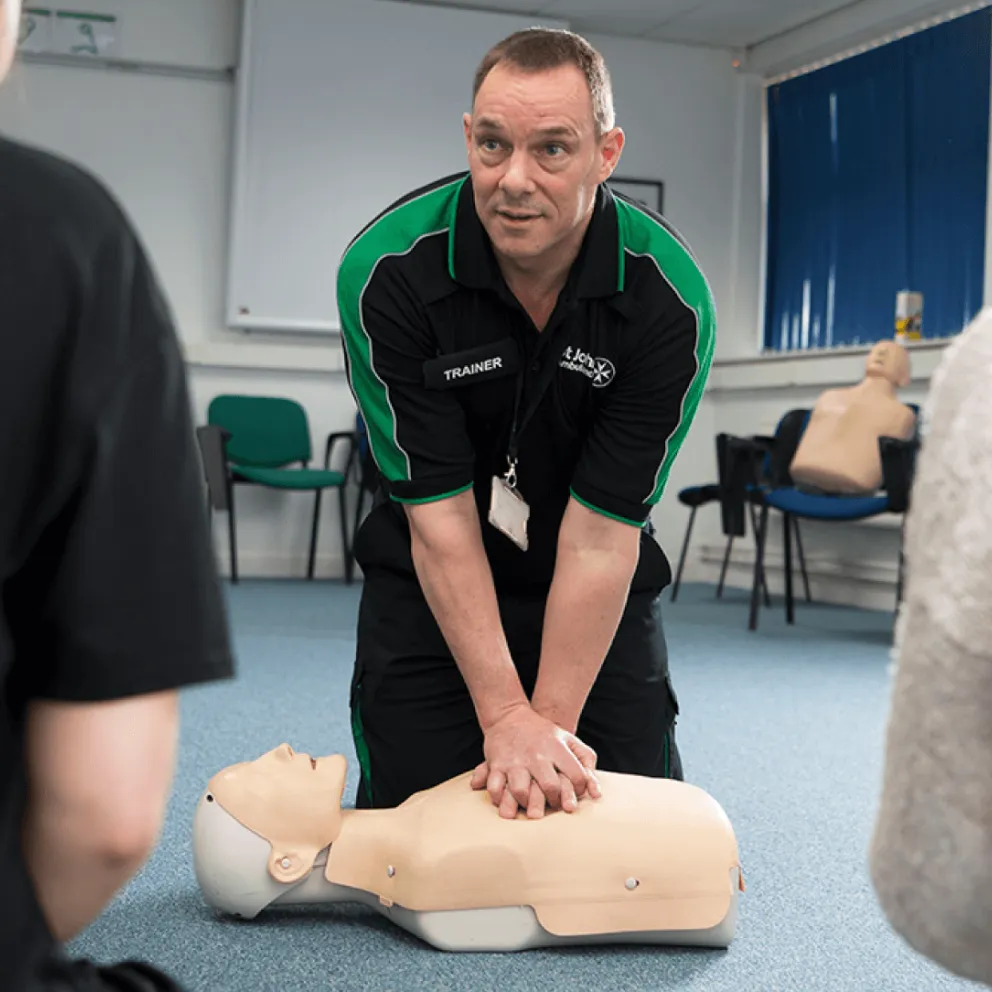
How to perform CPR
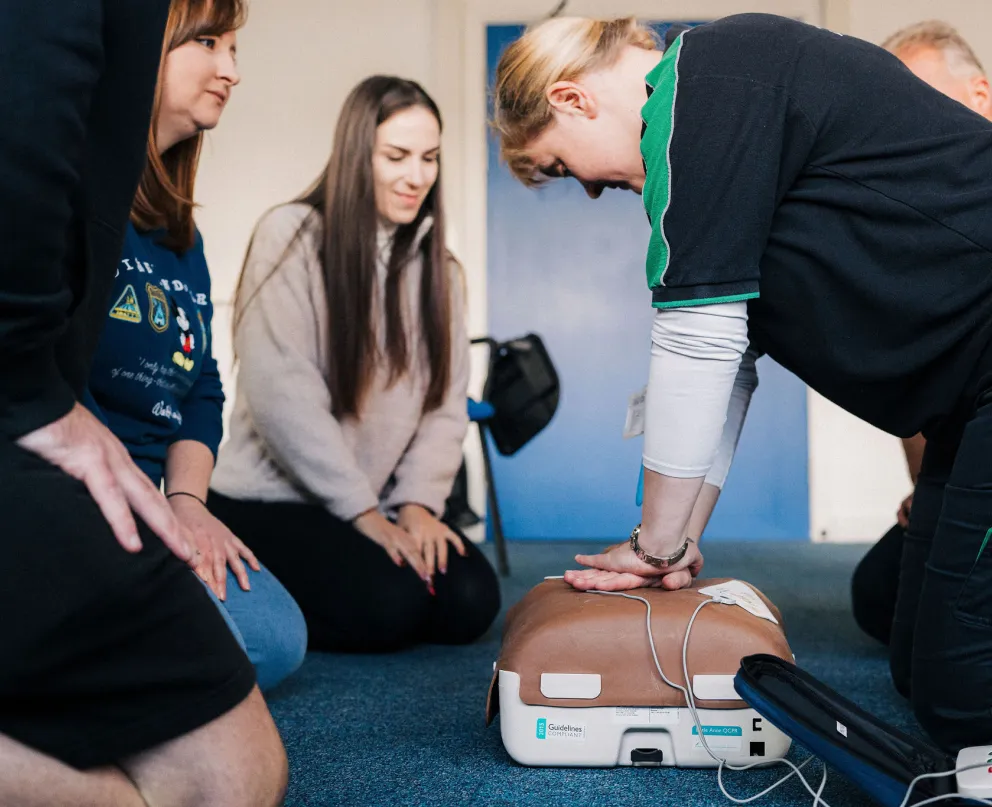
When a person isn’t breathing normally, every second counts. Performing CPR (cardiopulmonary resuscitation) helps keep oxygen flowing around the body until professional help can take over. Whether it’s a colleague who suddenly collapses at work or a stranger in the street, knowing how to do chest compressions and rescue breaths could double their chance of survival.
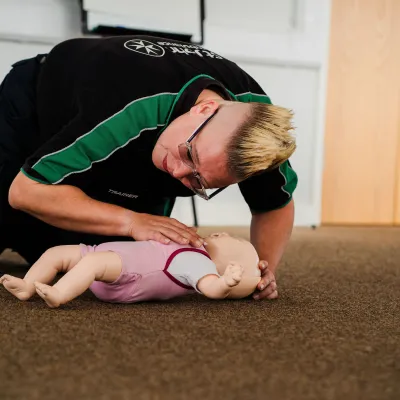
How to help someone who is choking
Choking can happen to anyone — a child swallowing something small, or an adult struggling while eating. In those frightening moments, knowing how to react calmly and effectively can save a life. Our guidance takes you through the simple steps to clear the airway safely, giving you the confidence to step in when it matters most.