The first aid advice for severe bleeding
Why is controlling bleeding so important?
If the bleeding isn’t controlled quickly, the casualty may lose a lot of blood, become unresponsive and possibly develop shock.
Shock does not mean emotional shock; it is a life-threatening condition, often caused by blood loss.
First aid advice for someone with severe bleeding:
Step 1 – Protect
With open wounds, there’s a risk of infection, so wear protective first aid gloves (if available) to help prevent any infection passing between you both.
Step 2 – Pressure
Apply direct pressure to the wound using a sterile dressing if possible or a clean non-fluffy cloth, to stop the bleeding. If you don’t have a dressing you can ask the casualty to do this themselves. If the wound is covered by the casualty’s clothing, remove or cut the clothes to uncover the wound. If there’s an object in the wound, don’t pull it out. It may be acting as a plug to reduce the bleeding. Instead apply pressure on either side of the object to push the edges together.
Step 3 – Call 999
Ask a helper to call 999/112 for emergency help and give ambulance control details of where the wound is and the extent of the bleeding. If you are on your own, use the hands-free speaker on your phone so that you can treat while speaking to ambulance control.
Step 4 – Bandage
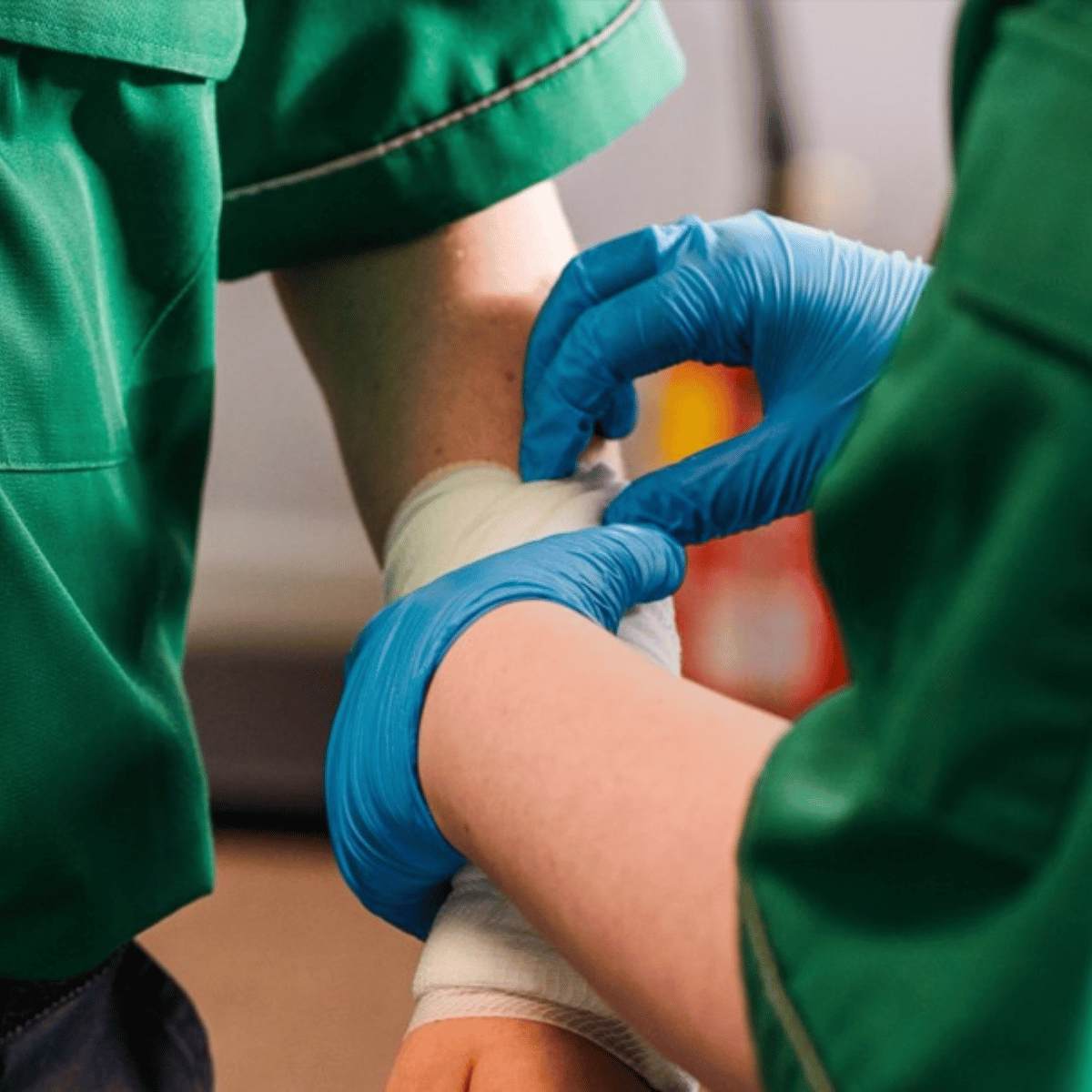
Once the bleeding is under control, clean the wound using running water and if possible a sterile wipe. Apply a dressing to protect the wound and maintain pressure. It should be firm enough to maintain pressure but not so tight that it restricts their circulation.
Step 5 – Check bandage
Check their circulation beyond the bandage. Press one of the nails or the skin beyond the bandage for five seconds until it turns pale, then release the pressure. If the colour does not return within two seconds, the bandage is too tight. If necessary, loosen and reapply the bandage.
Step 6 – Position
The loss of blood could cause the casualty to develop shock. Treat them for this by helping them to lie down, on a rug or blanket. Raise and support their legs, so they are above the level of their heart. You should then loosen any tight clothing around their neck, chest and waist and cover the casualty with a blanket to keep them warm.
Step 7 – Reapply if needed
If blood comes through the dressing, remove it and reapply pressure with a new dressing or pad to control the bleeding. Once the bleed is under control, secure in place with the bandage, tying the knot over the wound to keep the pressure on.
Step 8 – Support
Support the injured part with a sling or bandage and keep checking the circulation beyond the bandage every 10 minutes.
Step 9 – Monitor
Keep monitoring their level of response until help arrives. If they become unresponsive at any point, prepare to start CPR.


Sign-up to learn new lifesaving skills
Become a certified first aider and learn new skills with our hands-on training courses